
Microfeminism describes small everyday actions that challenge gender stereotypes. Here are 17 acts of microfeminism from speaking up when women are interrupted to questioning language, beauty standards, and social expectations.
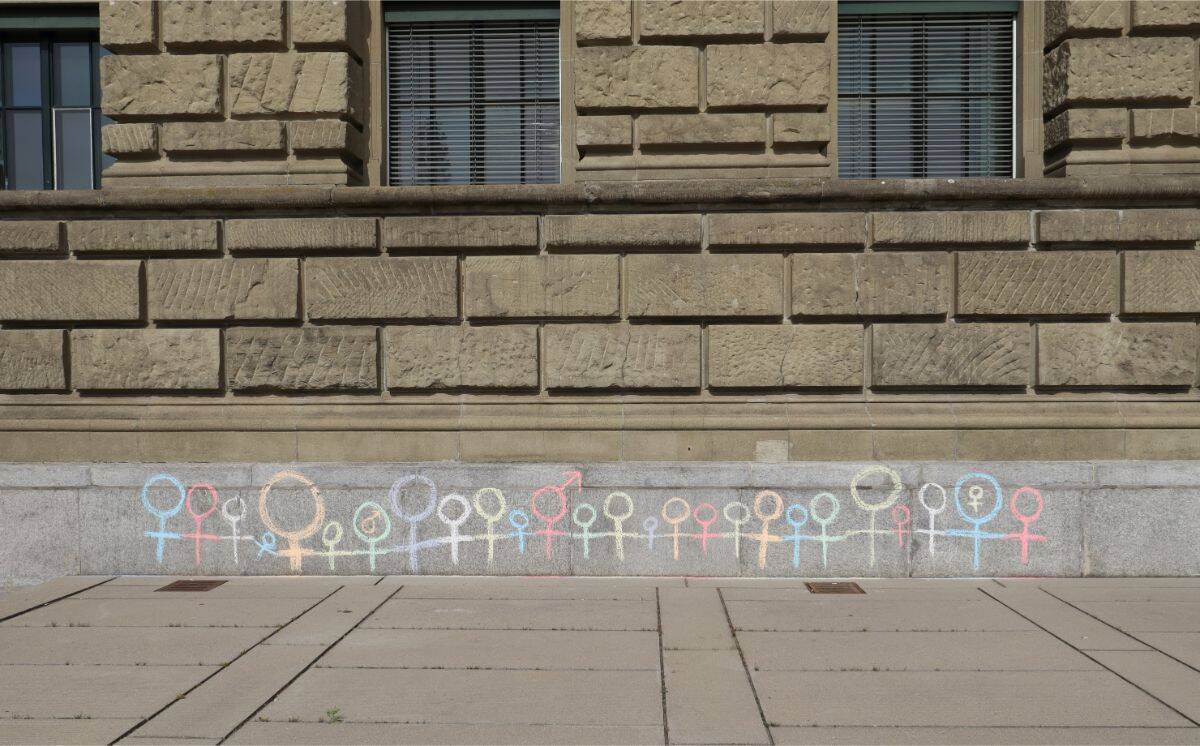
Have you heard of microfeminism?
Microfeminism refers to small, everyday actions that can challenge outdated gender roles. Instead of large-scale activism, it focuses on small behaviors you and I can perform on a daily basis. These are behaviors that question inequality in daily life; they are sometimes seriously, sometimes with a touch of humor.
I was thinking about this today at the supermarket checkout. The cashier handed every woman a tulip because tomorrow is International Women's Day. To me, it's a sweet gesture.
You could argue, though, that refusing the flower might be an act of microfeminism. After all, in many Western cultures it's traditionally men who give flowers to women.
But for me, the flower symbolizes something else: a reminder that gender equality still isn't fully achieved. The tulip isn't really about women needing flowers. It's about acknowledging women, and recognizing that they should be seen and heard.
So, International Women's Day isn't primarily about celebrating the "beautiful sex." It's about visibility for a group that has historically been overlooked, underrepresented in law and politics, often disadvantaged, and still physically threatened on a daily basis.
That's where feminism and microfeminism come in. If feminism operates on a societal level, microfeminism happens on the individual level, in everyday interactions.
The beauty of microfeminism is that anyone can practice it. I can practice it and you can practice it, in ways that fit our own lives.
17 Acts of Microfeminism
These are 17 examples of acts of microfeminism to get you started.
A quick note: only try the suggestions that feel comfortable and safe for you. Some of these small acts may feel unusual at first, and that's okay. Stepping outside your comfort zone can take a bit of courage, but it should never feel unsafe.
The first eight suggestions speak mainly to women, though men can support these changes. The remaining ideas apply to everyone.
- Speak up when you're interrupted.
If a man keeps interrupting you, say: "I'd like to finish my sentence."
If you notice another woman being interrupted, step in and say you'd like to hear what she was saying.
Once you start paying attention to this, it's almost mind-boggling how often women get interrupted. I certainly started noticing it everywhere.
- Don't automatically move out of the way.
When walking down the street and a man or a group of men approaches, women often step aside first. Try simply continuing your path and see what happens (but don't take risks, do it only if it's safe to do so).
- Stop apologizing for everything.
Many women are socialized to say "sorry" constantly. Not everything requires an apology. You can train yourself to substitute "sorry" with "okay" or "understood".
- Normalize talking about periods.
Menstruation is a normal biological process, yet it's still often treated as something that shouldn't be mentioned.
Once, when a colleague asked me in a meeting how I was doing, I answered honestly: I had PMS and was low on energy because my period was about to start. I knew his partner was a doctor, so I suspected the topic might not be entirely taboo for him.
Still, it felt slightly awkward to say it out loud. Which is exactly why it matters.
- Don't smile out of obligation.
Women often smile to appear polite or approachable. Sometimes men even tell women to smile more because it makes them "prettier."
Try smiling only when you genuinely feel like it.
If someone tells you to smile, you might reply with humor: "You go first," or "Tell me a joke."
- Question beauty standards.
For example, underarm hair. Right now it's considered standard for women to shave their armpits, while men are rarely expected to do the same. You could try not shaving for a while and simply observe the reactions.
- Skip makeup sometimes.
Women are often expected to look "put together," which frequently means wearing makeup. Having the occasional makeup-free day can challenge that expectation, and maybe it helps you fall in love with your makeup-free face again.
- Buy flowers for men.
Traditionally, men bring flowers or chocolates to women. But why should it always go one way? I love receiving flowers, but I also like gifting flowers to men.
- Don't call adult women "girls."
I often hear men saying "I'm dating this girl" or people generally referring to the female soccer team as "the girls' team." This is belittling language. Yet it would sound strange if a woman said, "I'm dating a boy." Or the "boys' football team".
But if you're talking about adults, say women.
- Rethink "guys" as a default.
"Hey guys" is often used for mixed groups, even though the word is not gender neutral. I always flinch when a sports instructor at an online session gives instructions to "guys", I don't feel included.
Simple alternatives like "everyone," "team," or "folks" are easy to adopt.
- Don't automatically assign women the organizing tasks.
In meetings, women are often asked to take notes, summarize discussions, or organize the next meeting. These responsibilities can easily be shared.
- Avoid gendered expressions.
Phrases like "Debbie Downer" are gendered. Neutral alternatives such as "killjoy," "wet blanket," or "party pooper" work just as well.
- "No" is a complete sentence.
You don't always need to explain or justify your boundaries and choices. "No" is enough.
- Ask a man to repeat a problematic comment.
If someone says something that feels inappropriate or dismissive, ask:
"Could you repeat that?"
People often realize on their own how the remark sounds. And sure, problematic remarks can come from a woman as well.
- Ask newly married men about their last name.
Women are often asked whether they changed their last name after marriage.
Turning the question around can highlight the assumption.
- Say "birth name" instead of "maiden name."
"Birth name" is a more neutral alternative. "Maiden name" has been used only for women and stems from a time when women were expected to enter marriage, well, "maiden".
- Use last names for women in power.
Men in leadership positions are often referred to by their last names, while women are called by their first names.
Think of how often we hear "Hillary" or "Kamala." Using last names signals the same level of respect.
These acts of microfeminism might seem tiny, but they can challenge gender stereotypes and hopefully slowly shift the norms around us.
I'd love to hear from you: what are your favorite acts of microfeminism?
Other Posts You Might Like
These posts are honouring women and gender equality:
- 10 Real Actions Towards Gender Equality
- 5 Powerful Women's Charities to Support
- Why "Marry Me" Recipe Titles Are Problematic
Enjoy,
Ramona
♥


Ovidiu says
Hi Ramona, if I may speak from a man's perspective. Yes is yes, this is right, I think these acts of microfeminism are correct. First of all, men and women should be equal, even if there are differences between them. First five points are clear. About the seven one, I like it because I really like when a woman doesn't wear makeup. I like to see a woman early in the morning with hair that she considers messy, or other moments that she deems inappropriate. It is something true and natural about these moments. And beautiful. About number eight, well, the question is if a man needs flowers. But I can say I would be delighted by her gesture itself. A small story about this: One day I had to leave really early, at about 5–6 in the morning, and when I got back at 8, I found a lot of flowers in my bed, in an arrangement. I was so impressed. I was thinking that the woman (girlfriend at that time) woke up at that crazy hour to do this. I can't forget it, even after 20 years. I'm still working at point nine. Eleven — yeah, there shouldn't be things by default. Fourteen is also valid for men. In general, there are rules of conduct, but there are moments in life when you need to act differently if it's for a higher purpose.
Ramona Winkler says
Thanks for sharing your perspective, Ovidiu, I appreciate you taking the time to reflect on this. For me, the heart of it is really about women choosing what feels right for themselves, makeup or not, flowers or not.